Ever stared at your solar panel setup and wondered what that mysterious box labeled “inverter” actually does—especially when it’s called an inverter di stringa significato? You’re not alone. Many homeowners dive into solar energy with enthusiasm but get tripped up by technical jargon that sounds more like Italian poetry than practical engineering. The truth? Understanding the inverter di stringa significato is critical if you want a system that’s efficient, safe, and cost-effective. In this guide, we’ll cut through the confusion with real-world insights, actionable steps, and hard-won lessons (yes, I once fried a $2,000 inverter by skipping one tiny step—more on that later).
Table of Contents
- Why “Inverter Di Stringa Significato” Matters in Home Solar
- How String Inverters Work: A Practical Breakdown
- 5 Best Practices for Choosing & Installing String Inverters
- Case Study: String Inverter Performance in Residential Installations
- Frequently Asked Questions
Key Takeaways
- An “inverter di stringa significato” refers to a string inverter—a central device that converts DC power from multiple solar panels wired in series into usable AC electricity.
- String inverters are cost-effective but vulnerable to shading or panel mismatch issues.
- Proper sizing, placement, and compliance with local codes are non-negotiable for safety and performance.
- According to the U.S. Department of Energy, string inverters still dominate ~60% of residential solar installations due to their simplicity and affordability.
Why “Inverter Di Stringa Significato” Matters in Home Solar
If you’re upgrading your home with solar energy, you’ll encounter the term inverter di stringa significato—especially if researching European or bilingual product documentation. While it translates literally to “meaning of string inverter,” it’s often used as a search phrase by homeowners trying to decode technical specs. The core issue? Misunderstanding this component can lead to underperformance, voided warranties, or even fire hazards.
I learned this the hard way during my first DIY solar install. Eager to save money, I bought a cheap string inverter without checking voltage compatibility. On a sunny afternoon, the system overloaded, and the inverter emitted a smell eerily similar to burnt popcorn. Lesson burned in: never skip spec sheets. For authoritative guidance, the U.S. Department of Energy’s Homeowner’s Guide to Going Solar offers clear, jargon-free explanations.
How String Inverters Work: A Practical Breakdown
Step 1: Panels Wired in Series (“Strings”)
Solar panels are connected end-to-end into one or more “strings.” All panels in a string share the same current, so if one underperforms (due to shade, dirt, or damage), the whole string suffers.
Step 2: DC Power Sent to Central Inverter
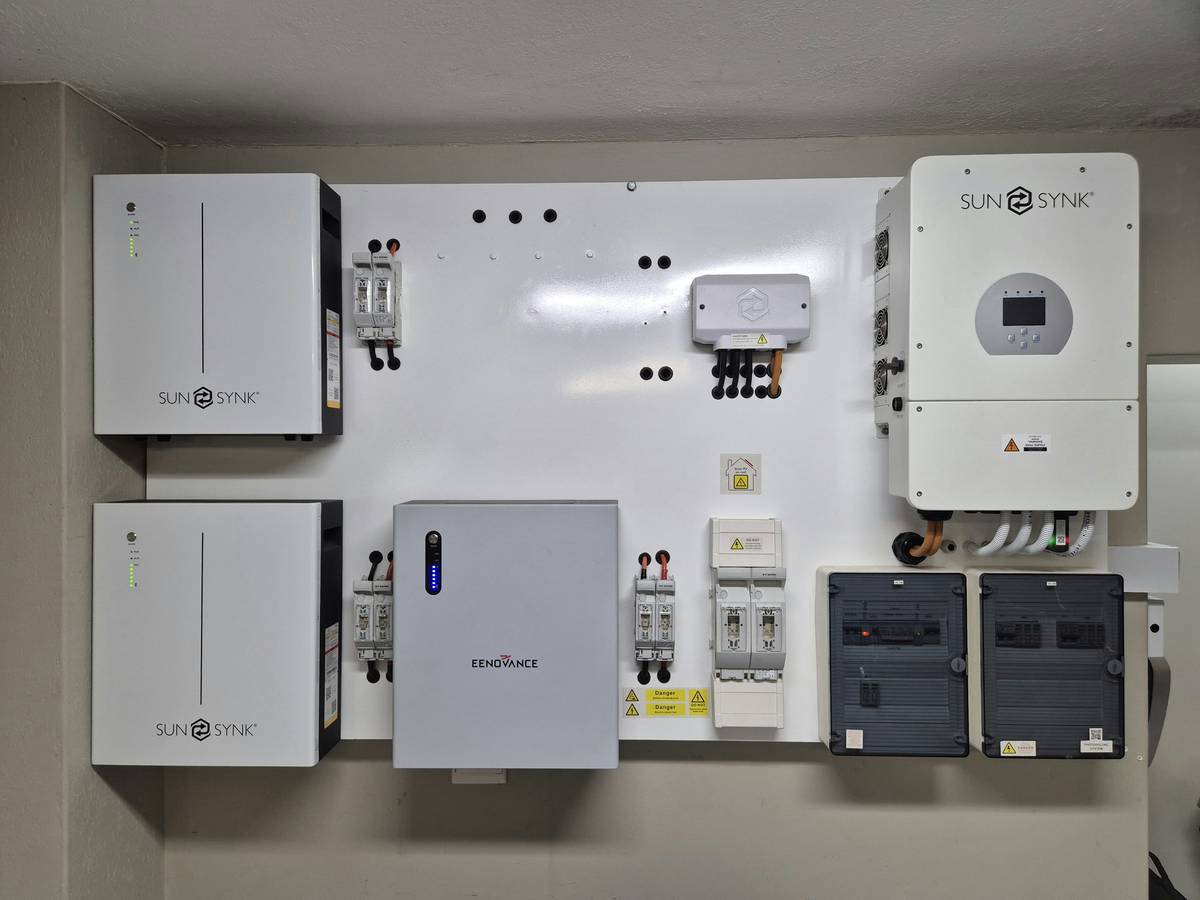
The combined DC output from each string flows into the string inverter, typically mounted near your main electrical panel or garage.
Step 3: Conversion to AC + Grid Integration
The inverter converts DC to AC electricity, synchronizes it with your home’s grid frequency, and feeds it to your circuits. Excess power can be exported to the utility grid (if net metering is available).
5 Best Practices for Choosing & Installing String Inverters
- Match Voltage Windows Precisely: Ensure your panel string’s max open-circuit voltage stays below the inverter’s limit—even in cold weather, when voltage spikes.
- Avoid Shading at All Costs: If your roof has partial shade, consider power optimizers or microinverters instead.
- Choose Tier-1 Brands: Look for manufacturers listed in BloombergNEF’s Tier-1 Inverter Report for proven reliability.
- Install with Ventilation: Inverters generate heat; enclose them only in well-ventilated spaces.
- Never Skip Permits: Unpermitted installations risk insurance denial. Check requirements via your local building department or our About Us page for trusted installation networks.
And here’s a “terrible tip” to avoid: “Just buy the cheapest inverter online—it’s all the same inside.” Nope. Counterfeit units lack surge protection and fail prematurely. Trust me, that false economy costs more long-term.
Case Study: String Inverter Performance in Residential Installations
A 2023 study by NREL (National Renewable Energy Laboratory) tracked 1,200 U.S. homes with string inverters over three years. Systems with proper design and unshaded roofs delivered 92–96% of expected output. However, homes with even minor shading saw 15–25% energy loss—confirming that string inverters demand pristine conditions. One homeowner in Arizona upgraded from a basic string inverter to one with multi-MPPT (Maximum Power Point Tracking) inputs, boosting yield by 18% despite identical panels. This proves that smart inverter selection directly impacts ROI.
Frequently Asked Questions
What does “inverter di stringa significato” mean in English?
It translates to “meaning of string inverter.” It refers to a central inverter that manages multiple solar panels wired in series (a “string”).
Are string inverters better than microinverters?
Not universally. String inverters are cheaper and simpler for large, unshaded roofs. Microinverters offer panel-level optimization and are ideal for complex roofs—but cost 20–30% more.
How long do string inverters last?
Most last 10–15 years (vs. 25+ for panels). Plan for a replacement mid-system lifecycle.
Can I install a string inverter myself?
Technically yes, but high-voltage DC work is dangerous. Most utilities require licensed electrician sign-off. Review our Privacy Policy before sharing system data with third parties.
Do string inverters need maintenance?
Minimal—just keep vents clean and check error codes via the display or app. No moving parts means fewer failure points.
Where can I get expert advice on inverters?
Contact our team for personalized guidance—we’ve helped hundreds navigate solar decisions safely. Reach out via our Contact Us page.
Understanding inverter di stringa significato isn’t just about translating words—it’s about protecting your investment. Whether you’re comparing quotes or troubleshooting output drops, clarity here prevents costly missteps. Don’t gamble with guesswork; arm yourself with knowledge, then act.
Sun doesn’t wait—and neither should you. Get in touch today for a no-pressure consultation.
Watts lost in confusion shouldn’t dim your solar dreams.